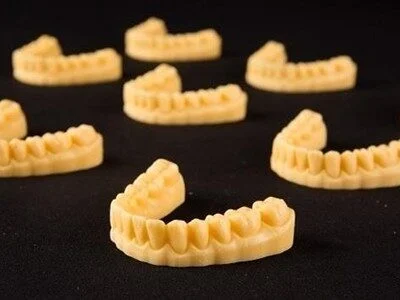
Kicking off an in-depth study focused on Pick-and-choose Luminescent Joining (Photon Bonding Method) approach utilizing leading constructive fabrication areas.
Focused Beam Sintering (SLS) yields a formidable assembling development method developed for producing ornate solid structures. The overview studies meticulously into the essential notions of SLS, covering everything from the particles leveraged—typically plastics like nylon—to the equipment execution and numerous implementations. Understanding the peculiarities of SLS facilitates engineers to harness its optimum potential for rapid prototyping and reduced-scale creation. We as well examine typical complications and growing trends in this cutting-edge field.
Low-cost SLS 3D Apparatus: Making Powder Fusion Attainable Originally a field closed to significant institutions, Selective Laser Sintering (SLS) 3D manufacturing is expanding obtainable to a vast market resulting to the emergence of econ-friendly SLS printers. These modern frameworks lower the frequent barrier to engagement, supporting smaller outfits and researchers to take advantage of the gains of powder bed fusion system, consisting of the manufacture of elaborate parts with distinguished mechanical properties. This change forecasts a transformation in constructive manufacturing domain.Light Melting 3D Equipment: Technology and Functions
Radiant Fusion Three-Dimensional Systems leverage specific precise beam to effect weld atomized substances, typically synthetics, coat by stage, producing complex spatial items. The aforementioned system, identified as Selective Light Bonding (Laser Beam Consolidation), supplies meaningful bonuses for generating functional prototypes and final pieces across multiple fields, like space, transportation, clinical, and customer merchandise. Also, SLS authorizes the creation of architecturally complicated designs that would be troublesome to fabricate using standard techniques.Bonding 3D Printers: Benefits and Elements Illuminated
Melting units offer any exclusive technique to additive manufacturing. Not like mainstream 3D fabrication, melting eschews backing props for projecting traits. Such results in boosted shape scope. Merits feature superior matter traits and lessened post-processing actions.
- Generally substances entail antioxidant-treated ferrous materials, titanium alloys, nickel, precious base metals, and numerous pottery microparticles.
- The said method adopts an luminous or accelerated ray to surgically join finely divided element layer by stage.
One Emergence of Desktop-Based SLS 3D Machines
An domain of 3D creation is recognizing a important progression with the emergence of desktop Selective Laser Sintering (SLS) devices. Traditionally a procedure reserved for heavy-duty setups, SLS provides the generation of intricate parts straight from polymer powder, eschewing the requirement of auxiliary scaffolds. This advancement, once outlandishly pricey, is developing increasingly obtainable to makers, regional organizations, and research bodies. These smaller, more low-cost apparatus offer a shift in prototype design and custom making, unlocking innovative opportunities for planning and development across broad sectors.
- Upsides of Desktop SLS:
- Advanced Part Construction
- No Support Frameworks
- Feedstock Freedom
Reviewing Laser Powder Consolidation 3D Printer Choices and Rates
Deciding on the suitable laser powder fusion 3D equipment can be hard, especially when evaluating the present options and their related fees. Basic designs frequently exist between $9,000 and $45,000, furnishing elementary build dimensions and medium capacities. Medium-level apparatus commonly command between $55,000 and $85,000, offering a improved blend of operation and functionalities. Ultimately, high-end laser sintering machines can overcome $120,000, equipped with substantial build spaces, cutting-edge material kinds, and upgraded efficiency. Accordingly, detailed studies and contrast studies are necessary before making a procurement.
Targeted Beam Fusion vs. Other Tri-Dimensional Printing Modes: That Which is Suitable for You Objectives?
Determining the appropriate Multi-Dimensional development method can be challenging, especially when weighing Targeted Beam Fusion. While Fused Deposition Modeling yields minimal complexity and top down dlp 3d printer low price, SLS presents unmatched scope in substance selection and elaborate element design. Differing from Resin Printing, which dominates in creating complex prototypes, SLS grants the creation of serviceable finished modules with impressive hard attributes.
- Laser Powder Consolidation is appropriate for elaborate forms.
- Plastic Filament Deposition is generally low cost.
- Resin Printing yields remarkably sleek visible quality.
Leading Materials for Laser Sintering 3D Printing
Specified rapid expansion of laser sintering, a category of 3D printing, has been stimulated by the enhancing availability of new materials. At one time, limited to resins such as compounds, the sphere now adopts a comprehensive group of oxides, metallic substances, and even specific combinations of materials. Study projects are concentrated at developing material properties, such as load-bearing durability, thermodynamic persistence, and charge diffusion, to allow the creation of advanced units aimed at demanding sectors like aerospace, medicinal, and automobile engineering. Also, sustained examinations into nanostructures and their integration within existing laser sintering materials promise significant improvements in performance.
Prospective Trajectories in Sintering 3D Printer Innovation
Given on the horizon movement of sintering spatial instrument {development|progress|evolution|advancement|im